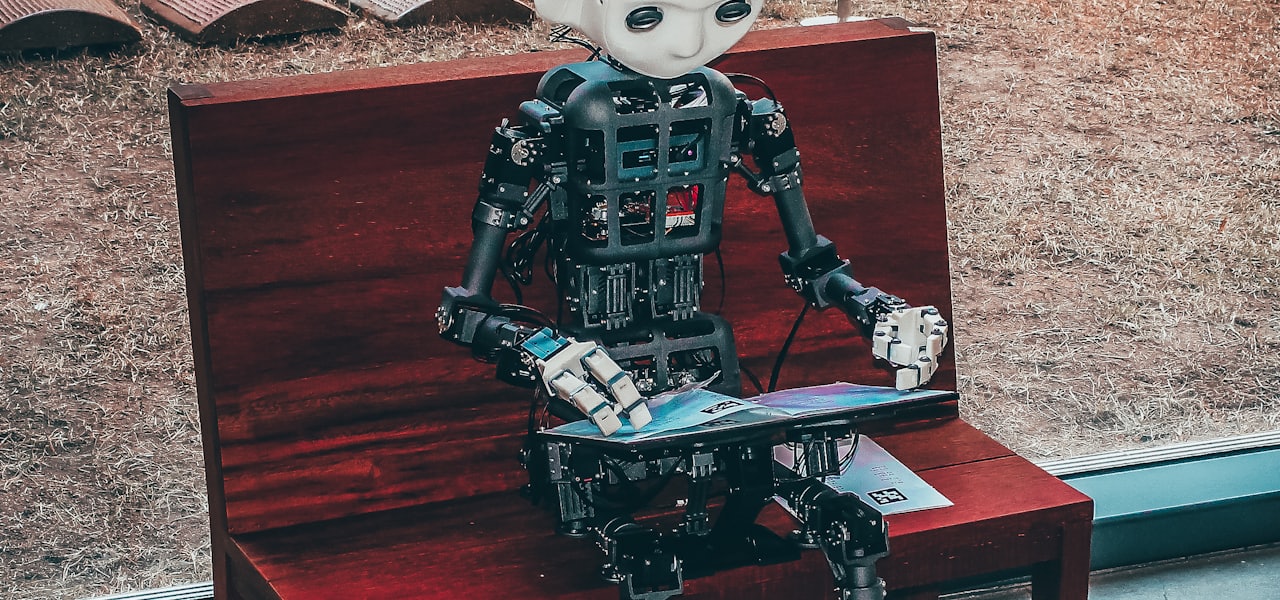
JOONE (Java Object Oriented Neural Engine) is a component based neural network framework built in Java. == Features == Joone consists of a component-based architecture based on linkable components that can be extended to build new learning algorithms and neural networks architectures. Components are plug-in code modules that are linked to produce an information flow. New components can be added and reused. Beyond simulation, Joone also has to some extent multi-platform deployment capabilities. Joone has a GUI Editor to graphically create and test any neural network, and a distributed training environment that allows for neural networks to be trained on multiple remote machines. == Comparison == As of 2010, Joone, Encog and Neuroph are the major free component based neural network development environment available for the Java platform. Unlike the two other (commercial) systems that are in existence, Synapse and NeuroSolutions, it is written in Java and has direct cross-platform support. A limited number of components exist and the graphical development environment is rudimentary so it has significantly fewer features than its commercial counterparts. Joone can be considered to be more of a neural network framework than a full integrated development environment. Unlike its commercial counterparts, it has a strong focus on code-based development of neural networks rather than visual construction. While in theory Joone can be used to construct a wider array of adaptive systems (including those with non-adaptive elements), its focus is on backpropagation based neural networks.
Pharmacy automation
Pharmacy automation involves the mechanical processes of handling and distributing medications. Any pharmacy task may be involved, including counting small objects (e.g., tablets, capsules); measuring and mixing powders and liquids for compounding; tracking and updating customer information in databases (e.g., personally identifiable information (PII), medical history, drug interaction risk detection); and inventory management. This article focuses on the changes that have taken place in the local, or community pharmacy since the 1960s. == History == Dispensing medications in a community pharmacy before the 1970s was a time-consuming operation. The pharmacist dispensed prescriptions in tablet or capsule form with a simple tray and spatula. Many new medications were developed by pharmaceutical manufacturers at an ever-increasing pace, and medications prices were rising steeply. A typical community pharmacist was working longer hours and often forced to hire staff to handle increased workloads which resulted in less time to focus on safety issues. These additional factors led to use of a machine to count medications. The original electronic portable digital tablet counting technology was invented in Manchester, England between 1967 and 1970 by the brothers John and Frank Kirby. I had the original idea of how the machine would work and it was my patent, but it was a joint effort getting it to work in a saleable form. It was 3 years of very hard work. I had originally studied heavy electrical engineering before changing over to Medical School and qualifying as a Medical Doctor in 1968. In fact I was Senior House (Casualty) Officer (A&E or ER) in 1970 at North Manchester General Hospital when I filed the patent. I must have been the only hospital doctor in Britain with an oscilloscope, a soldering iron and a drawing board in his room in the Doctors' Residence. The housekeepers were bemused by all the wires. Frank originally trained as a Banker but quit to take a job with a local electronics firm during the development. He died in 1987, a terrible loss. [Extract from personal communication received in March 2010 from John Kirby.] Frank and John Kirby and their associate Rodney Lester were pioneers in pharmacy automation and small-object counting technology. In 1967, the Kirbys invented a portable digital tablet counter to count tablets and capsules. With Lester they formed a limited company. In 1970, their invention was patented and put into production in Oldham, England. The tablet counter aided the pharmacy industry with time-consuming manual counting of drug prescriptions. A counting machine consistently counted medications accurately and quickly. This aspect of pharmacy automation was quickly adopted, and innovations emerged every decade to aid the pharmacy industry to deliver medications quickly, safely, and economically. Modern pharmacies have many new options to improve their workflow by using the new technology, and can choose intelligently from the many options available. === Chronology === On 1 January 1971 commercial production of the first portable digital tablet counters in the World began. John Kirby had filed U.K. Patent number GB1358378(A) on 8 September 1970 and U.S. patent number 3789194 on 9 August 1971. These early electronic counters were designed to help pharmacies replace the common (but often inaccurate) practice of counting medications by hand. In 1975, the digital technology was exported to America. In early 1980 a dedicated research, development and production facility was built in Oldham, England at a cost of £500,000. Between 1982 and 1983, two separate development facilities had been created. In America, overseen by Rodney Lester; and in England, overseen by the Kirby brothers. In 1987, Frank Kirby died. In 1989, John Kirby moved his UK facility to Devon, England. A simple to operate machine had been developed to accurately and quickly count prescription medications. Technology improvements soon resulted in a more compact model. The price of such equipment in 1980 was around £1,300. This substantial investment in new technology was a major financial consideration, but the pharmacy community considered the use of a counting machine as a superior method compared to hand-counting medications. These early devices became known as tablet counter, capsule counter, pill counter, or drug counter. The new counting technology replaced manual methods in many industries such as, vitamin and diet supplement manufacturing. Technicians needed a small, affordable device to count and bottle medications. In England and America, the 1980s and 1990s saw new the development of high-speed machines for counting and bottle filling, Like their pharmacy-based counterparts, these industrial units were designed to be fast and simple to operate, yet remain small and cost effective. In America, in the late 1990s/early 2000s a new type of tablet counter appeared. It was simple to use, compact, inexpensive, and had good counting accuracy. At the turn of the millennium technical advances allowed the design of counters with a software verification system. With an onboard computer, displaying photo images of medications to assist the pharmacist or pharmacy technician to verify that the correct medication was being dispensed. In addition, a database for storing all prescriptions that were counted on the device. Between September 2005 and May 2007, American Capital made a major financial investment in Kirby Lester, which then relocated to a larger facility to expand its research and development capabilities. This move added extra space for product research and development facility (R&D). It allowed the opportunity to develop new advanced technology products that met the pharmacy's needs for simple, accurate, and cost-effective ways to dispense prescriptions safely. Pictured here is an early American type of integrated counter and packaging device. This machine was a third generation step in the evolution of pharmacy automated devices. Later models held pre-counted containers of commonly-prescribed medications. == Global variations == In the EU member states legislation was introduced in 1998 which had a major effect on UK Pharmacy operations. It effectively prohibited the use of tablet counters for counting and dispensing bulk packaged tablets. Both usage and sales of the machines in the UK declined rapidly as a result of the introduction of blister packaging for medicines. == Current state of the industry == A tablet counter has become a standard in more than 30,000 sites in 35 countries (as of 2010) (including many non-pharmacy sites, such as manufacturing facilities that use a counting machine as a check for small items). During the 1990s through 2012, numerous new pharmacy automation products came to market. During this timeframe, counting technologies, robotics, workflow management software, and interactive voice recognition (IVR) systems for retail (both chain and independent), outpatient, government, and closed-door pharmacies (mail order and central fill) were all introduced. Additionally, the concept of scalability - of migrating from an entry-level product to the next level of automation (e.g., counting technology to robotics) - was introduced and subsequently launched a new product line in 1997. Pharmacists everywhere are making the switch to automation for its increased speed, greater accuracy, and better security. As the industry evolves and customer expectations grow, automation is becoming less of a luxury and more of a necessity. Especially for independent pharmacies, automation is now a means of keeping up with the competition of large chain pharmacies. == Technological changes and design improvements == Constant developments in technology make the dispensing of prescription medications safer, more accurate and more efficient. In America, in 2008, "next-generation" counting and verification systems were introduced. Based on the counting technology employed in preceding models, later machines included the ability to help the pharmacy operate more effectively. Equipped with a new computer interface to a pharmacy management system, with workflow and inventory software. It also included "checks and balances" to ensure the technician and pharmacist were dispensing the correct medication for each patient. This is something that is important to keep reported correctly when dealing with controlled substances like narcotics. This was a step forward to verify all 100% of prescriptions that were dispensed by pharmacy staff. In America, in 2009, further advanced counters were designed that included the ability to dispense hands-free – a feature that many operators had desired. This allowed pharmacies to automate their most commonly dispensed medications via calibrated cassettes. Thirty of a pharmacy's common medications would now be dispensed automatically. Another new model doubled that throughput via an enclosed robotic mechanism. Robo
Hebbian theory
Hebbian theory is a neuropsychological theory claiming that an increase in synaptic efficacy arises from a presynaptic cell's repeated and persistent stimulation of a postsynaptic cell. It is an attempt to explain synaptic plasticity, the adaptation of neurons during the learning process. Hebbian theory was introduced by Donald Hebb in his 1949 book The Organization of Behavior. The theory is also called Hebb's rule, Hebb's law, Hebb's postulate, and cell assembly theory. Hebb states it as follows: Let us assume that the persistence or repetition of a reverberatory activity (or "trace") tends to induce lasting cellular changes that add to its stability. ... When an axon of cell A is near enough to excite a cell B and repeatedly or persistently takes part in firing it, some growth process or metabolic change takes place in one or both cells such that A's efficiency, as one of the cells firing B, is increased. The theory is often summarized as "Neurons that fire together, wire together." However, Hebb emphasized that cell A needs to "take part in firing" cell B, and such causality can occur only if cell A fires just before, not at the same time as, cell B. This aspect of causation in Hebb's work foreshadowed what is now known about spike-timing-dependent plasticity, which requires temporal precedence. Hebbian theory attempts to explain associative or Hebbian learning, in which simultaneous activation of cells leads to pronounced increases in synaptic strength between those cells. It also provides a biological basis for errorless learning methods for education and memory rehabilitation. In the study of neural networks in cognitive function, it is often regarded as the neuronal basis of unsupervised learning. == Engrams, cell assembly theory, and learning == Hebbian theory provides an explanation for how neurons might connect to become engrams, which may be stored in overlapping cell assemblies, or groups of neurons that encode specific information. Initially created as a way to explain recurrent activity in specific groups of cortical neurons, Hebb's theories on the form and function of cell assemblies can be understood from the following: The general idea is an old one, that any two cells or systems of cells that are repeatedly active at the same time will tend to become 'associated' so that activity in one facilitates activity in the other. Hebb also wrote: When one cell repeatedly assists in firing another, the axon of the first cell develops synaptic knobs (or enlarges them if they already exist) in contact with the soma of the second cell. D. Alan Allport posits additional ideas regarding cell assembly theory and its role in forming engrams using the concept of auto-association, or the brain's ability to retrieve information based on a partial cue, described as follows: If the inputs to a system cause the same pattern of activity to occur repeatedly, the set of active elements constituting that pattern will become increasingly strongly inter-associated. That is, each element will tend to turn on every other element and (with negative weights) to turn off the elements that do not form part of the pattern. To put it another way, the pattern as a whole will become 'auto-associated'. We may call a learned (auto-associated) pattern an engram. Research conducted in the laboratory of Nobel laureate Eric Kandel has provided evidence supporting the role of Hebbian learning mechanisms at synapses in the marine gastropod Aplysia californica. Because synapses in the peripheral nervous system of marine invertebrates are much easier to control in experiments, Kandel's research found that Hebbian long-term potentiation along with activity-dependent presynaptic facilitation are both necessary for synaptic plasticity and classical conditioning in Aplysia californica. While research on invertebrates has established fundamental mechanisms of learning and memory, much of the work on long-lasting synaptic changes between vertebrate neurons involves the use of non-physiological experimental stimulation of brain cells. However, some of the physiologically relevant synapse modification mechanisms that have been studied in vertebrate brains do seem to be examples of Hebbian processes. One such review indicates that long-lasting changes in synaptic strengths can be induced by physiologically relevant synaptic activity using both Hebbian and non-Hebbian mechanisms. == Principles == In artificial neurons and artificial neural networks, Hebb's principle can be described as a method of determining how to alter the weights between model neurons. The weight between two neurons increases if the two neurons activate simultaneously, and reduces if they activate separately. Nodes that tend to be either both positive or both negative at the same time have strong positive weights, while those that tend to be opposite have strong negative weights. The following is a formulaic description of Hebbian learning (many other descriptions are possible): w i j = x i x j , {\displaystyle \,w_{ij}=x_{i}x_{j},} where w i j {\displaystyle w_{ij}} is the weight of the connection from neuron j {\displaystyle j} to neuron i {\displaystyle i} , and x i {\displaystyle x_{i}} is the input for neuron i {\displaystyle i} . This is an example of pattern learning, where weights are updated after every training example. In a Hopfield network, connections w i j {\displaystyle w_{ij}} are set to zero if i = j {\displaystyle i=j} (no reflexive connections allowed). With binary neurons (activations either 0 or 1), connections would be set to 1 if the connected neurons have the same activation for a pattern. When several training patterns are used, the expression becomes an average of the individuals: w i j = 1 p ∑ k = 1 p x i k x j k , {\displaystyle w_{ij}={\frac {1}{p}}\sum _{k=1}^{p}x_{i}^{k}x_{j}^{k},} where w i j {\displaystyle w_{ij}} is the weight of the connection from neuron j {\displaystyle j} to neuron i {\displaystyle i} , p {\displaystyle p} is the number of training patterns and x i k {\displaystyle x_{i}^{k}} the k {\displaystyle k} -th input for neuron i {\displaystyle i} . This is learning by epoch, with weights updated after all the training examples are presented and is last term applicable to both discrete and continuous training sets. Again, in a Hopfield network, connections w i j {\displaystyle w_{ij}} are set to zero if i = j {\displaystyle i=j} (no reflexive connections). A variation of Hebbian learning that takes into account phenomena such as blocking and other neural learning phenomena is the mathematical model of Harry Klopf. Klopf's model assumes that parts of a system with simple adaptive mechanisms can underlie more complex systems with more advanced adaptive behavior, such as neural networks. == Relationship to unsupervised learning, stability, and generalization == Because of the simple nature of Hebbian learning, based only on the coincidence of pre- and post-synaptic activity, it may not be intuitively clear why this form of plasticity leads to meaningful learning. However, it can be shown that Hebbian plasticity does pick up the statistical properties of the input in a way that can be categorized as unsupervised learning. This can be mathematically shown in a simplified example. Let us work under the simplifying assumption of a single rate-based neuron of rate y ( t ) {\displaystyle y(t)} , whose inputs have rates x 1 ( t ) . . . x N ( t ) {\displaystyle x_{1}(t)...x_{N}(t)} . The response of the neuron y ( t ) {\displaystyle y(t)} is usually described as a linear combination of its input, ∑ i w i x i {\displaystyle \sum _{i}w_{i}x_{i}} , followed by a response function f {\displaystyle f} : y = f ( ∑ i = 1 N w i x i ) . {\displaystyle y=f\left(\sum _{i=1}^{N}w_{i}x_{i}\right).} As defined in the previous sections, Hebbian plasticity describes the evolution in time of the synaptic weight w {\displaystyle w} : d w i d t = η x i y . {\displaystyle {\frac {dw_{i}}{dt}}=\eta x_{i}y.} Assuming, for simplicity, an identity response function f ( a ) = a {\displaystyle f(a)=a} , we can write d w i d t = η x i ∑ j = 1 N w j x j {\displaystyle {\frac {dw_{i}}{dt}}=\eta x_{i}\sum _{j=1}^{N}w_{j}x_{j}} or in matrix form: d w d t = η x x T w . {\displaystyle {\frac {d\mathbf {w} }{dt}}=\eta \mathbf {x} \mathbf {x} ^{T}\mathbf {w} .} As in the previous chapter, if training by epoch is done an average ⟨ … ⟩ {\displaystyle \langle \dots \rangle } over discrete or continuous (time) training set of x {\displaystyle \mathbf {x} } can be done: d w d t = ⟨ η x x T w ⟩ = η ⟨ x x T ⟩ w = η C w . {\displaystyle {\frac {d\mathbf {w} }{dt}}=\langle \eta \mathbf {x} \mathbf {x} ^{T}\mathbf {w} \rangle =\eta \langle \mathbf {x} \mathbf {x} ^{T}\rangle \mathbf {w} =\eta C\mathbf {w} .} where C = ⟨ x x T ⟩ {\displaystyle C=\langle \,\mathbf {x} \mathbf {x} ^{T}\rangle } is the correlation matrix of the input under the additional assumption that ⟨ x ⟩ = 0 {\displaystyle \langle \mathbf
The Best Free AI Video Editor for Beginners
Comparing the best AI video editor? An AI video editor is software that uses machine learning to help you get more done — it lowers the barrier so anyone can produce professional output. Privacy matters too: check whether your data trains the model and whether a no-log or enterprise tier is available. Whether you are a beginner or a pro, the right AI video editor slots into your workflow and pays for itself fast. Below we compare features, pricing, and real output so you can choose with confidence.
Markov chain
In probability theory and statistics, a Markov chain or Markov process is a stochastic process describing a sequence of possible events in which the probability of each event depends only on the state attained in the previous event. Informally, this may be thought of as, "What happens next depends only on the state of affairs now." A countably infinite sequence, in which the chain moves state at discrete time steps, gives a discrete-time Markov chain (DTMC). A continuous-time process is called a continuous-time Markov chain (CTMC). Markov processes are named in honor of the Russian mathematician Andrey Markov. Markov chains have many applications as statistical models of real-world processes. They provide the basis for general stochastic simulation methods known as Markov chain Monte Carlo, which are used for simulating sampling from complex probability distributions, and have found application in areas including Bayesian statistics, biology, chemistry, economics, finance, information theory, physics, signal processing, and speech processing. The adjectives Markovian and Markov are used to describe something that is related to a Markov process. == Principles == === Definition === A Markov process is a stochastic process that satisfies the Markov property (sometimes characterized as "memorylessness"). In simpler terms, it is a process for which predictions can be made regarding future outcomes based solely on its present state and—most importantly—such predictions are just as good as the ones that could be made knowing the process's full history. In other words, conditional on the present state of the system, its future and past states are independent. A Markov chain is a type of Markov process that has either a discrete state space or a discrete index set (often representing time), but the precise definition of a Markov chain varies. For example, it is common to define a Markov chain as a Markov process in either discrete or continuous time with a countable state space (thus regardless of the nature of time), but it is also common to define a Markov chain as having discrete time in either countable or continuous state space (thus regardless of the state space). === Types of Markov chains === The system's state space and time parameter index need to be specified. The following table gives an overview of the different instances of Markov processes for different levels of state space generality for both discrete and continuous time: Note that there is no definitive agreement in the literature on the use of some of the terms that signify special cases of Markov processes. Usually the term "Markov chain" is reserved for a process with a discrete set of times, that is, a discrete-time Markov chain (DTMC), but a few authors use the term "Markov process" to refer to a continuous-time Markov chain (CTMC) without explicit mention. In addition, there are other extensions of Markov processes that are referred to as such but do not necessarily fall within any of these four categories (see Markov model). Moreover, the time index need not necessarily be real-valued; like with the state space, there are conceivable processes that move through index sets with other mathematical constructs. Notice that the general state space continuous-time Markov chain is general to such a degree that it has no designated term. While the time parameter is usually discrete, the state space of a Markov chain does not have any generally agreed-on restrictions: the term may refer to a process on an arbitrary state space. However, many applications of Markov chains employ finite or countably infinite state spaces, which have a more straightforward statistical analysis. Besides time-index and state-space parameters, there are many other variations, extensions and generalizations (see Variations). For simplicity, most of this article concentrates on the discrete-time, discrete state-space case, unless mentioned otherwise. === Transitions === The changes of state of the system are called transitions. The probabilities associated with various state changes are called transition probabilities. The process is characterized by a state space, a transition matrix describing the probabilities of particular transitions, and an initial state (or initial distribution) across the state space. By convention, we assume all possible states and transitions have been included in the definition of the process, so there is always a next state, and the process does not terminate. A discrete-time random process involves a system which is in a certain state at each step, with the state changing randomly between steps. The steps are often thought of as moments in time, but they can equally well refer to physical distance or any other discrete measurement. Formally, the steps are the integers or natural numbers, and the random process is a mapping of these to states. The Markov property states that the conditional probability distribution for the system at the next step (and in fact at all future steps) depends only on the current state of the system, and not additionally on the state of the system at previous steps. Since the system changes randomly, it is generally impossible to predict with certainty the state of a Markov chain at a given point in the future. However, the statistical properties of the system's future can be predicted. In many applications, it is these statistical properties that are important. == History == Andrey Markov studied Markov processes in the early 20th century, publishing his first paper on the topic in 1906. Markov processes in continuous time were discovered long before his work in the early 20th century in the form of the Poisson process. Markov was interested in studying an extension of independent random sequences, motivated by a disagreement with Pavel Nekrasov who claimed independence was necessary for the weak law of large numbers to hold. In his first paper on Markov chains, published in 1906, Markov showed that under certain conditions the average outcomes of the Markov chain would converge to a fixed vector of values, so proving a weak law of large numbers without the independence assumption, which had been commonly regarded as a requirement for such mathematical laws to hold. Markov later used Markov chains to study the distribution of vowels in Eugene Onegin, written by Alexander Pushkin, and proved a central limit theorem for such chains. In 1912 Henri Poincaré studied Markov chains on finite groups with an aim to study card shuffling. Other early uses of Markov chains include a diffusion model, introduced by Paul and Tatyana Ehrenfest in 1907, and a branching process, introduced by Francis Galton and Henry William Watson in 1873, preceding the work of Markov. After the work of Galton and Watson, it was later revealed that their branching process had been independently discovered and studied around three decades earlier by Irénée-Jules Bienaymé. Starting in 1928, Maurice Fréchet became interested in Markov chains, eventually resulting in him publishing in 1938 a detailed study on Markov chains. Andrey Kolmogorov developed in a 1931 paper a large part of the early theory of continuous-time Markov processes. Kolmogorov was partly inspired by Louis Bachelier's 1900 work on fluctuations in the stock market as well as Norbert Wiener's work on Einstein's model of Brownian movement. He introduced and studied a particular set of Markov processes known as diffusion processes, where he derived a set of differential equations describing the processes. Independent of Kolmogorov's work, Sydney Chapman derived in a 1928 paper an equation, now called the Chapman–Kolmogorov equation, in a less mathematically rigorous way than Kolmogorov, while studying Brownian movement. The differential equations are now called the Kolmogorov equations or the Kolmogorov–Chapman equations. Other mathematicians who contributed significantly to the foundations of Markov processes include William Feller, starting in 1930s, and then later Eugene Dynkin, starting in the 1950s. == Examples == Mark V. Shaney is a third-order Markov chain program, and a Markov text generator. It ingests the sample text (the Tao Te Ching, or the posts of a Usenet group) and creates a massive list of every sequence of three successive words (triplet) which occurs in the text. It then chooses two words at random, and looks for a word which follows those two in one of the triplets in its massive list. If there is more than one, it picks at random (identical triplets count separately, so a sequence which occurs twice is twice as likely to be picked as one which only occurs once). It then adds that word to the generated text. Then, in the same way, it picks a triplet that starts with the second and third words in the generated text, and that gives a fourth word. It adds the fourth word, then repeats with the third and fourth words, and so on. Random walks based on integers and the gambler's ruin problem are ex
Keith Youngin George II
Keith "Youngin" George II is a former mixtape DJ, music executive, manager, producer, and technology app director. He has collaborated with Maino, T-Pain, Nas and Soulja Boy, among others. He was instrumental in the launch of social media app and website, Kandiid in 2021 and served as Fliiks App Director of Regional Development. == Career == Keith Anthony George II was born in Upper Heyford, Oxfordshire, England. His father was in the Air Force which exposed him to different cultures and music. He graduated from Allen High School and attended San Antonio College. George's music career began in 2006 as a mixtape DJ working as DJ Youngin Beatz. He performed at various shows and worked with a variety of artists, managers, and music executives. In 2007, George released the mixtape, Untapped market Vol. 1 (Da Underdogz), which featured tracks from artists including Kanye West, Lil Wayne, 50 Cent, Yung Berg, and Nelly. In 2008, he began working with Def Jam executive Sarah Alminawi who was managing Maino at the time. George played a key role in the marketing and promotional success of Maino's single, Hi Hater, which peaked at #8 on Billboard's US Bubbling Under Hot 100 chart. In 2021, George was an advisor and infrastructure head at Kandiid, a social media app which won a W3 Award in 2022. In 2023, he became involved with Fliiks App as Director of Regional Development which earned a Telly Award, two Muse Awards, and a W3 Award in 2025. In 2025, George was a composer and producer on two singles on Sekou Andrews's album, Koumami; The Chosen One: ACT 1 (featuring Lion Babe) and Love Don't Care (featuring Jordin Sparks and Omari Hardwick). In 2025, he was awarded an Atlanta City Proclamation for Philanthropy and Community Leadership for his partnership with Women's International Grail, a nonprofit organization that assists women, single mothers, and low-income families. He also collaborates with local youth programs, creative networks, and minority-owned startups, providing access to mentorship and industry knowledge. == Awards ==
Kristian Kersting
Kristian Kersting (born November 28, 1973, in Cuxhaven, Germany) is a German computer scientist. He is Professor of Artificial intelligence and Machine Learning at the Department of Computer Science at the Technische Universität Darmstadt, Head of the Artificial Intelligence and Machine Learning Lab (AIML) and Co-Director of hessian.AI, the Hessian Center for Artificial Intelligence. He is known for his research on statistical relational artificial intelligence, probabilistic programming, and deep probabilistic learning. == Life == Kersting studied computer science at the University of Freiburg, where he received his Ph.D. in 2006. At the university he attended a course on artificial intelligence given by Bernhard Nebel and became interested in the topic. He was a visiting postdoctoral researcher at the KU Leuven and a postdoctoral associate at the Massachusetts Institute of Technology (MIT). His advisor at MIT was Leslie Pack Kaelbling. From 2008 to 2012, he led a research group at the Fraunhofer Institute for Intelligent Analysis and Information Systems (IAIS). He then became a Juniorprofessor at the University of Bonn and associate Professor at the computer science department of the Technical University of Dortmund. From 2017 to 2019, he was professor of machine Learning and since 2019 professor of artificial intelligence and machine learning at the department of computer science of the Technische Universität Darmstadt. He is also a researcher at ATHENE, the largest research institute for IT security in Europe and leads a research department at the German Research Centre for Artificial Intelligence (DFKI). Kristian Kersting is the co-spokesperson of Cluster of Excellence "Reasonable Artificial Intelligence", RAI (2026-32). == Awards == In 2006, he received the AI Dissertation Award of the European Association for Artificial Intelligence. In 2008, he received the Fraunhofer Attract research grant with a budget of 2.5 million euros over five years. He was appointed Fellow of the European Association for Artificial Intelligence (EurAI) and Fellow of the European Laboratory for Learning and Intelligent Systems (ELLIS) in 2019. In 2019 he received the "Deutscher KI-Preis" ("German AI Award"), endowed with 100,000 euros, for his outstanding scientific achievements in the field of artificial intelligence. He was elected an AAAI Fellow in 2024. == Publications == De Raedt L., Kersting K. (2008) Probabilistic Inductive Logic Programming. In: De Raedt L., Frasconi P., Kersting K., Muggleton S. (eds) Probabilistic Inductive Logic Programming. Lecture Notes in Computer Science, vol 4911. Springer, Berlin, Heidelberg. ISBN 978-3-540-78651-1 Luc De Raedt, Kristian Kersting, Sriraam Natarajan and David Poole, "Statistical Relational Artificial Intelligence: Logic, Probability, and Computation", Synthesis Lectures on Artificial Intelligence and Machine Learning" Morgan & Claypool, March 2016 ISBN 9781627058414.